


If you sell to California shoppers from a Shopify store, CCPA and CPRA still set the bar for how you handle personal information. The old free checklist download for this post is no longer available, and parts of it were already out of date. This page is now a full in-browser guide you can use as a working compliance map.
This article is for general education only. It is not legal advice. Confirm details with qualified counsel for your facts.
Key takeaways
- CCPA (as amended by CPRA) gives California consumers stronger control over personal information, including rights to know, delete, correct, opt out of sale/sharing, and limit use of sensitive personal information.
- For Shopify merchants, the highest-risk gaps are usually weak privacy notices, broken request workflows, missing or unclear “Do Not Sell or Share” controls, and poor handling of opt-out preference signals such as Global Privacy Control (GPC).
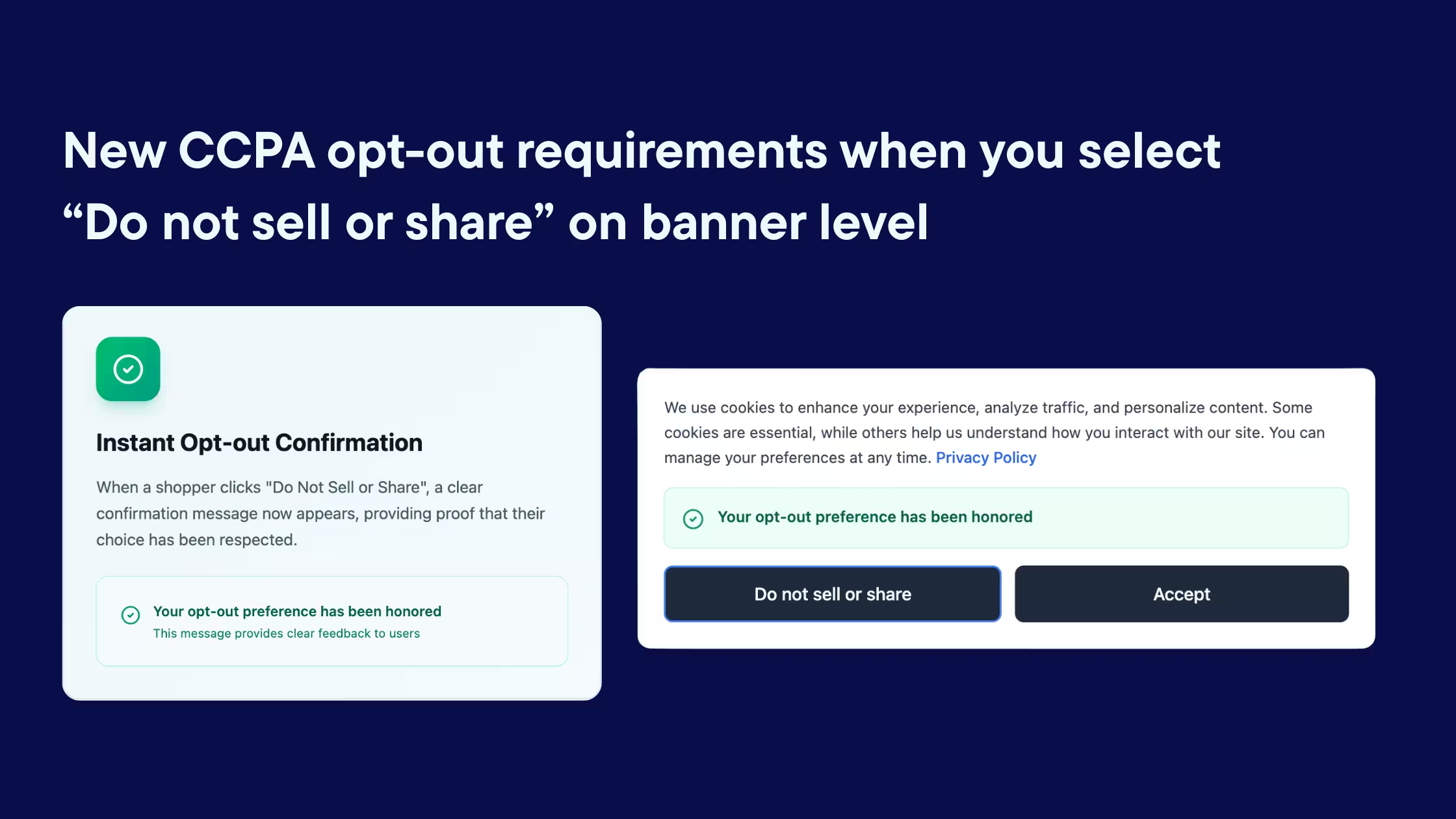
- As of 2026, opt-out experiences need to be clearer. Shoppers should understand that their choice was honored, not just that a button existed.
- Consentmo can support banner-level USA opt-out signals, privacy request handling, and documentation. Theme content, vendor contracts, and legal review still matter.
What CCPA and CPRA actually cover
The California Consumer Privacy Act (CCPA), amended by the California Privacy Rights Act (CPRA), gives consumers more control over personal information businesses collect. According to the California Attorney General’s CCPA overview, core consumer rights include:
- The right to know what personal information is collected, used, and shared
- The right to delete personal information (with limited exceptions)
- The right to opt out of the sale or sharing of personal information, including via Global Privacy Control
- The right to non-discrimination for exercising privacy rights
- The right to correct inaccurate personal information
- The right to limit use and disclosure of sensitive personal information
CPRA did not create a totally separate law. It amended CCPA. Most teams still say “CCPA/CPRA” when they mean the current California framework.
For a broader product-level walkthrough of the 2026 opt-out confirmation shift, see our update: CCPA 2026 Update: Opt-Out Confirmation Is Now Mandatory On Banner Level.
Does CCPA apply to your Shopify store?
Not every small store is automatically in scope, but many growing ecommerce brands are. Thresholds and facts matter (revenue, data volume, selling/sharing personal information, and business model). Practical rule for operators:
- If you market to California residents, run ads/pixels that can share identifiers, or process customer data at scale, treat CCPA readiness as baseline hygiene.
- If you are unsure about thresholds, get a quick legal review before you assume you are out of scope.
Even when a formal threshold is debatable, strong privacy UX still reduces risk and builds trust.
The 2026 Shopify merchant action map
Use this as your living compliance map. Work top to bottom. Mark each item done only when the storefront behavior is live and documented.
1. Map what you collect and why
- List personal information categories from checkout, accounts, support, email, SMS, reviews, and apps.
- Note purposes: order fulfillment, analytics, ads, fraud prevention, personalization.
- Identify “sale” or “share” scenarios under California rules, especially ad tech and cross-context behavioral advertising.
- Flag sensitive personal information if you collect it (for example certain account, precise location, or payment-adjacent data depending on setup).
2. Fix privacy notices and policy language
- Publish a clear privacy policy that explains categories collected, sources, purposes, retention, and third parties.
- Describe consumer rights and how to submit requests.
- Explain sale/share practices and how shoppers opt out.
- Keep notices easy to find from the footer, checkout path, and account areas.
- Review notice language whenever you add a new pixel, ESP, SMS tool, or personalization app.
3. Make “Do Not Sell or Share” real, not decorative
- Offer a clear Do Not Sell or Share path on the storefront.
- Honor opt-outs across cookies, pixels, and relevant vendors, not only in a footer link.
- Support opt-out preference signals such as GPC where required.
- Show visible confirmation when an opt-out is processed, so the shopper knows the choice worked.
- In Consentmo, enable USA Opt-out Signals under Cookie banner → Behavior on paid plans for banner-level confirmation and smoother dismissal after opt-out.
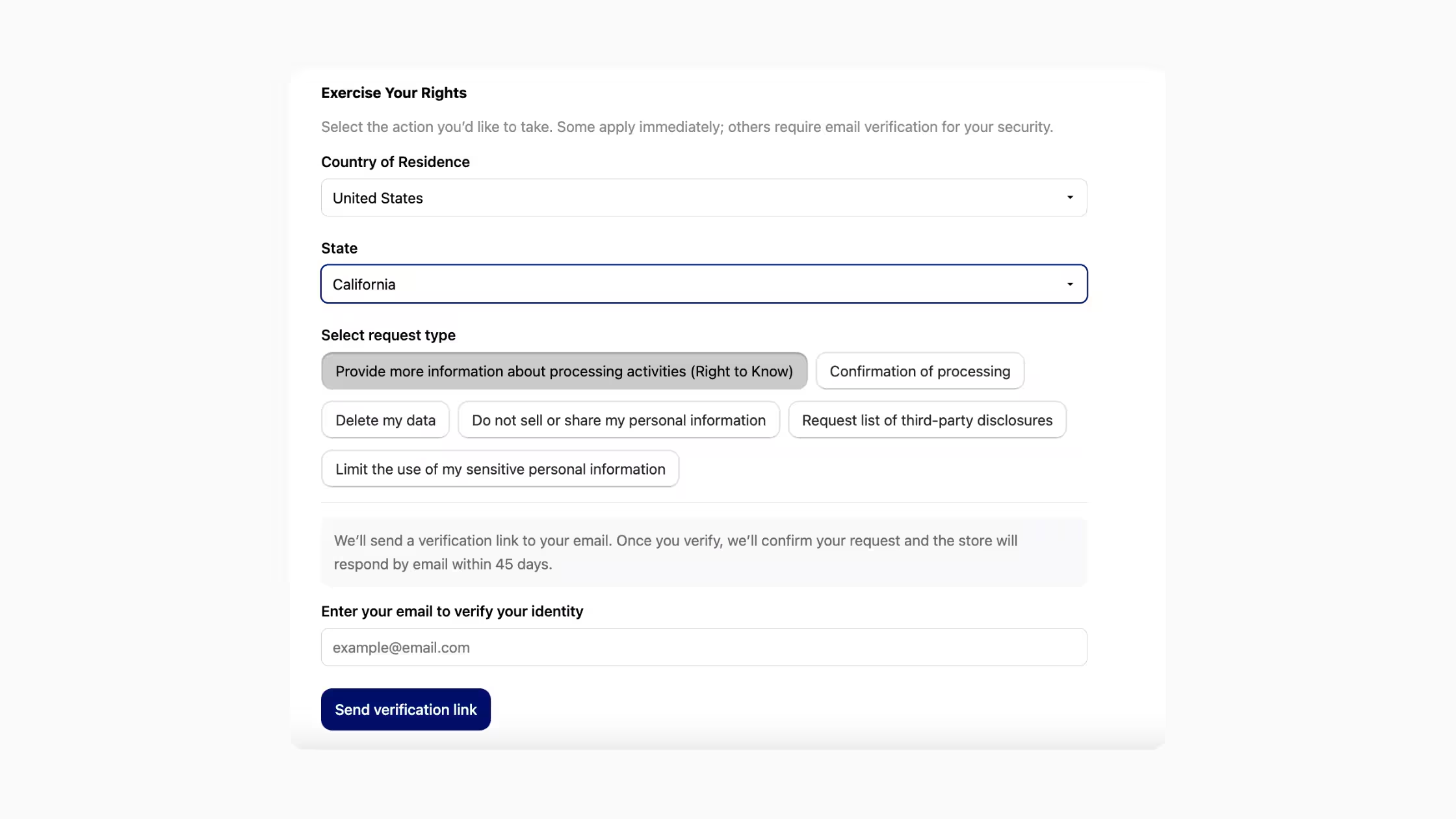
4. Build a consumer request workflow
- Accept requests to know, delete, correct, and limit sensitive PI use (as applicable).
- Verify the requester without creating unnecessary friction.
- Route requests across Shopify admin, apps, ESPs, helpdesk tools, and ad platforms.
- Track deadlines and response status in one place.
- Document what you disclosed, deleted, corrected, or denied (and why).
5. Control tracking before and after consent or opt-out
- Audit every marketing and analytics script on the storefront.
- Block or limit sale/share tags when the shopper opts out.
- Re-check theme app embeds and custom pixel setups after theme updates.
- Test both California and non-California views if you use geotargeting.
6. Align vendors and internal process
- Review processor/service-provider terms for major apps that touch customer data.
- Assign an owner for privacy requests, banner settings, and policy updates.
- Train support staff so deletion and access requests do not get lost in the inbox.
- Keep a simple evidence folder: policy versions, banner screenshots, request logs, and change dates.
Common Shopify gaps that still cause problems
- Footer-only opt-out with no effect on pixels
- No confirmation after Do Not Sell or Share
- GPC ignored or inconsistently applied
- Privacy policy that still reads like a 2019 template
- Request emails with no verification or no completion log
- App sprawl where one new marketing app reintroduces sale/share tags
If any of those sound familiar, fix process and tooling before you worry about perfect legal prose.
How Consentmo helps on California requirements
Consentmo is built for Shopify merchants who need privacy controls without a full legal ops team:
- Cookie banner controls for US opt-out flows, including USA Opt-out Signals for confirmation messaging
- Support for managing consent and preference experiences across regions
- Tools and workflows that help you handle privacy-related customer requests and keep better records
- Analytics and reporting so you can monitor banner and request activity over time
Start here if you need the app on your store: Install Consentmo on the Shopify App Store.
For the 2026 confirmation feature walkthrough, read: Opt-out confirmation update.
Related guides
- CCPA and CPRA explained
- How the Disney CCPA fine changes opt-out rules for Shopify stores
- GDPR compliance guide for Shopify stores
Bottom line
You do not need an outdated downloadable checklist to get California privacy right. You need a live storefront that explains data practices clearly, honors opt-outs (including preference signals), confirms those choices, and completes consumer requests with a paper trail.
Use the action map above as your operating checklist inside the business. Update it when laws, pixels, or apps change. That is more durable than any static PDF.
This guide is informational and does not create an attorney-client relationship. Privacy laws and regulations change. Verify requirements for your business with qualified counsel.


_converted.avif)